A world of football

WITH two continents, South America and Europe, at the moment totally absorbed with football and the fallout of their main competitions, it’s easy to see how heavily football, and other sports, influence our language. 

English is peppered with phrases and expressions that reference the sport, or sport in general.

I could kick off with a number of examples… “She decided to kick off the session with a stern lecture”, or “It all kicked off soon after the meeting ended”. Or I could say from the kick-off, meaning from the start … “There was fast and furious action from the kick-off”. 

You could be accused of moving the goalposts, meaning that someone thinks you’re changing the rules while something is still going on. I tend to think the term’s origins are not so much in the formal game but in the informal, impromptu backyard games where coats, schoolbags and sometimes large stones served as goalposts (which could be moved closer together, maybe surreptitiously, if the opponents were doing better than expected).

If you’re watching from the sidelines, you’re not taking part in the action – especially if you’re then also suggesting how things should be done differently. An example would be “You should contribute some money or lend a hand instead of just watching from the sidelines”.

A level playing field describes a situation in which both sides of a disagreement or a conflict have the same opportunities … it comes from the fact that in football both sides need to be able to play in all parts of the field, on both sides of the centre line, and if the field slopes away on one side one team or the other will have an advantage. 

Someone who has an open goal has an unopposed chance to progress or gain an advantage during something that is usually contested. To “miss an open goal” is to fail in a situation where everything is in your favour.

A clean sheet usually refers to a team managing to protect its goal for the whole of a game … so that the other team fails to score against them… “Liverpool kept a clean sheet during the Cup final”. The phrase may have come from the way that goals were recorded on separate sheets of paper for each team. 
It can also mean a fresh start… “He started with a clean sheet after being pardoned and moving to a new area where no-one knew him”. 

Someone who is warming the bench is someone who is not contributing but is taking up a place in the team. In football the term refers to a team member who is on the substitutes’ bench but not yet playing. They may be called on later if needed.

If you take your eye off the ball you lose focus, or you let your mind wander or you stop paying attention…. “He took his eye off the ball for just a moment, and his rival took advantage with the winning bid.” 
Words that I always check

How not to use “their”

There are some words that I will always check. Their spelling or meaning don’t come naturally to me, however many times I come across them. I may not always check them in a dictionary or with someone else. At the very least I’ll do a mental check, usually against one of the rules – “fri- your friend to the -end” or “i before the e, except after a c etc – I’ve made up or filed away to help me remember.

English delights in the various combinations of letters that can produce the same sound – and this applies to proper nouns as much as to other parts of speech. So I always check names also … Stuart/Stewart, Mohammed/Muhammed/Mohamed, Hussein/Hossain, Narayan/Narain, Huw/Hugh, Allan/Alan/Allen, Jon/John, and so on. The best person with whom to check a name is the one who is using it.

Their and there
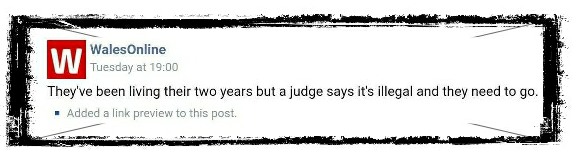
Someone got their spelling wrong in the clip, above, from a British news website. Or, worse, did they just get the wrong word?

“Their” is a possessive pronoun. It refers to people and what they own. “There” indicates place, which is what is meant – and what should have been used – in the article referred to above.


Bear and bare
The key thing here is to remember that “bare” always refers to emptiness or the absence or lack of something… the cupboard was bare (empty), the ground was bare (nothing growing on it), her bare hands (no protection on her hands).

“Bear” on the other hand has a couple of meanings. It can be used in the contextt of carrying or moving or transmitting something: “I bear this burden with humility”, or “I come bearing gifts”. It can also be used to describe a plant, animal or human reproducing: “The tree will bear fruit in time”, or “She bore three children during her marriage”. It is also the animal hero or culprit of many a tale, from authors such as Rudyard Kipling or any walker carelessly intruding in their forest habitat.


Bated and baited
We often see the phrase “waiting with bated breath”. It means someone was anxious or excited or nervous as they waited for something to happen. “Baited” means there was some kind of food on a hook or in a trap to attract and catch a quarry. “Bait” can also mean something that is used to lure or trick someone into doing something.


Check and cheque
If you “check” something, you examine it for quality and usefulness. A cheque, in British English, is the printed form on which a person can write in the amount they want to pay someone. The receiver can exchange that cheque at a bank for cash. Americans use “check” for that document … and for when they examine something.


Faze and phase
Faze means to disturb or shock, usually used, it seems, in a negative sense as in “She wasn’t fazed by all the interruptions”, or “The criticisms hardly fazed him”.
A phase is a particular period or stage in a process. You could say, “Her worst performance was during the swimming phase of the triathlon”.


Horde and hoard
Horde refers to groups of unruly people (often doing something we don’t quite agree with). “Hoard” can be either a noun or a verb. As a verb it means to store up (often in the sense that the store is more than necessary). As a noun it describes a store or collection of something.

There is also another word, hoarding, a noun which describes a large board or display on which advertisements are shown. It can also mean the fencing around a building site


Llama and lama
Llama is an animal), originating in South America, and at one time providing the basis for many a financial scam. A lama is a Tibetan Buddhist priest.


Site, cite, and sight

“Site” is a place or location: “This was the site (noun) of the massacre”. It is sometimes used as a verb: “You can site it here”. But that usage is usually in a technical or specialised way, for example, when someone is talking about a new building. 

“Cite” refers to quoting someone or something, especially as proof of your claim. A citation is when you give details of where you found the information you are using.

“Sight” is the ability to see. “His sight was damaged in the blast.”


Stationery and stationary
There’s a little trick I always use to remind myself of the correct word to use: An envelope, which starts with an e, is stationery. If I’m not referring to envelopes and related articles – pens, pencils, paper, ink – used for writing, I’ll use “stationary” which does not have an e for envelope. “Stationary” is used to describe something that’s not moving – stationary traffic.


 Story and storey
A story is a tale, a description of things that have happened. A story can be fictional or true. The plural is “stories”
Storey describes a floor or a level of a multi-level building (plural storeys)


Who or whom

It was my friend Rhodri, when I asked for ideas on topics for this blog, who suggested that I could try to explain when to use “who” and when to use “whom”. It’s a problem I had struggled with also so I could see why it might be worth an explanation.

I’ve always used a rule which I was quite pleased to have worked out from English usage, and one that had served me well in all the years I had tried to edit and revise other people’s copy. My rule is to try to turn the question around… if the pronoun in the answer is “them” or “her” or “him”, the correct term in your original sentence should be “whom”. If the pronoun is “he”, “she” or “they”, you should use “who”.

For example: “Who/whom would you give the money to?” The answer would be “I gave it to him/her/them” not “I gave it to he/she/they”.  Or “For who/whom is this dress being made?” The answer would be “It’s being made for her/them (or even “him”)”. So in both these examples you would use “whom”.

If you are considering “Who/whom is going to the city”, the answer would be “he/she/they” … “He/she/ is (or they are) going to the city”. So your choice here would be “who”.

There are rules in English that explain this in a structured way …  it all depends on whether the “who” or the “whom” being referred to is the object or subject of the sentence in which it should be used…that is, whether the “who” or “whom” is doing something, or whether something being done to that person. 

There are some writers who feel that “who” and “whom” are interchangeable – at least in spoken use – and some who feel that “whom” is disappearing from the language.

The always entertaining Bill Bryson, former sub-editor on the Times newspaper in London, points out in Troublesome Words that writers such as Shakespeare, Ben Johnson, Charles Dickens and Winston Churchill were sometimes confused by these relative pronouns.

In his explanation, by the way, Bryson then goes on to complicate matters by giving examples of where the simple rule falls apart – and discusses whether the distinction is worth the bother. 

That’s English for you. 

My pet hates

There are some things that I can’t get used to, however many times I hear or read them – and however often people say they’ve become part of the English language.

Sure, English, like any language, develops and changes as it hits the shores of different lands and mixes with other dialects and languages. It bends to the influences of arriving communities and the demands of changing and developing technologies.

But some things are plain wrong, especially in written English. They have developed from a mishearing or a misunderstanding.

should of

A good example of this is “should of” or “would/could of”, or even “may of”. 

“My injuries normally would of admitted me to Stoke Mandeville Spinal Hospital … ” said a man whose story was told in a newspaper a couple of days ago.

Or “… nothing would of worked to get her down” in a story about firefighters not being able to get a cat caught up a tree.

Another firefighter was reported to have said some deliberately lit fires  “… could of delayed us from attending more important incidents.”

They may well have been what the people said, but I would go so far as to make the case that journalists – for whom quotes, like facts, are sacred – should correct the wrong use of “of” in these quotes. The mistake results from a misspelling of the abbreviations “would’ve” (from “would have”) and “could’ve” (could have).

The reporter should know that in English words that sound the same can be spelled in different ways … and here the key word should be spelled “h-a-v-e”, not “o-f”.

was stood there

“She was just stood there”, or, “He was sat there reading a book” are painful to the ear and uncomfortable to read. The correct forms of the verb in each sentence are “standing” and “sitting”. They are describing actions that were going on at the time that the speaker was talking about.

hot temperature

Temperature can be higher or lower, not hotter or cooler. Temperature is a reading, a numerical definition of how hot something is, whether it’s the weather, a cup of tea, or a pint of beer. 

between… and/to

Quite often writers will use a “between/to” combination when defining a range of, say, years or weights. They might write “The couple stayed overseas between 10 to 15 years”, or “The boy’s weight ranged between 10 to 15kg over six months”. “Between” in those examples should be followed by “and” rather than “to” … 

There were between 15 and 20 soldiers on duty, 

or 

The temperatures stayed between 20 and 30 degrees all week.

Another mistake is to use “or” as in “We must choose between Tagore or Shakespeare for our literature classes”. The choice is always between one and the other, not or the other.

Sprung or sprang; swum or swam?

First published on April 28. Edited on April 29

THE death of Prince Philip gave the media another chance to tell the story of how he was considered some sort of a deity for a community of people on the island of Tanna in Vanuatu. So it came about that I was listening to an anthropologist on a BBC programme telling us that the prince “drunk” a special ceremonial drink as part of his role. 

I am surprised at how often writers and sub-editors feel they need to stop and debate whether the past tense of drink is “drunk” or “drank”, or whether the past tense of “swim” is  “swum” or “swam”. Is it “rung” or “rang”; “sung” or “sang”?

The correct words, in my view, are “drank”, swam”, “rang” and “sang”. They are the past tense forms. Simple past tense.

Words such as swum, drunk, and sung, which I think of as “the ‘U’ forms”, are past participles. They express an action that happened at a certain time and have an auxiliary or “helping” verb (had, was, be) before it: 

  • He had drunk the soda
  • She had swum all day
  • They had sung in the choir

They are also used in the passive sense:

  •         He was drunk
  •         The anthem was sung

To complicate matters, there are some words where the “U” form does create the past tense. Off the top of my head I can think of dig, sting, spin, and cling. The past tense of these words are dug, stung, clung and spun (the old form, span, has fallen out of use).

It could be that our problem only arises with irregular verbs. With regular verbs, we usually simply add an “-ed”, a “t”, or a “d” for the past tense. Irregular verbs require us to know a whole range of variations. First-language speakers of English pick these up as they grow and speak their mother tongue; learners enjoy the discovery of the variations. 

An “s” doesn’t always a plural make

A growing finance firm is looking for a new premise for its much bigger workforce

That was the headline, on a major newspaper website, for a report about a business looking for bigger offices. The firm was not looking for a new idea for its employees.

Another report said “Unsafe conditions” of the building have “slowed the physical investigation of the premise.”

In another instance, according to several newspapers and online sites, after a fire in which several members of a family were killed, a fire officer explained that 25 firefighters worked hard to recover and rescue five casualties from the premise.

A little later he said “they were aware family members were in the premise and they went in wearing breathing apparatus” .

The use, or misuse I should say, by the fire officer and the various newspapers, of the word “premise” illustrates some of the difficulties which people can have with English plurals.

What the fire officer meant when he used the word “premise” was “house” or “property”. What he should have said was “premises”.

In English many a noun can be made into a plural by the addition of “s” at the end. But this is not always the rule.

“Premise” means an assumption, a proposition or idea; “premises” means place, property, site.

“Premises” is one of those nouns in English which exist only in the plural form. They have no singular version. Other examples include thanks, series, binoculars, species, oats, pants, trousers, shorts, pliers, scissors, credentials …

Some of them, such as binoculars, trousers, shorts, pliers and scissors, can be preceded by “pair of” to indicate a single occurrence: a pair of trousers, a pair of binoculars.

Getting it write? Why the right word matters

They used the hose to dig his garden; then they took the hoes to the far end of the garden to water the plants in the boarders.

OK, that’s an extreme example above… and a made-up one. But if you do any sort of proofreading you’re bound to come across examples of how the wrong word sends the reader off on a tangent that the writer had not intended.

It defeats the purpose of the sentence, often irritates the reader – and sometimes it means the reader is lost to the sentence or even the article he or she was reading.

The literal meaning of the example above is that some people used a long, flexible, rubber or plastic pipe (hose) to dig a garden; then they took some digging implements (hoes) to the far end of the garden to water plants in people who were paying to live there (boarders).

English spelling birthed FRAME
The snippet above, from both the print and online versions of several newspapers, makes one think of a marine nursery. It started off as a press release

Here’s one I’ve come across often in its confused misuse: peak and peek.

“I stole a peak” is what I would write if what I mean is that I took a mountain that’s not mine. If I meant that I took a quick or sly look, I would say “I stole a peek”.

Then there’s defuse and diffuse.

Police officers were “on the scene to help diffuse the situation and calm crowds down”, a reporter wrote in a regional Australian newspaper recently. No, they helped defuse the situation.

Another newspaper, in Britain, included the following correction in the Homophone corner of its Clarifications and Corrections column: “The truth about Hard Sun is revealed to the public, forcing the government to diffuse the situation” (TV listings, 13 January, page 48, the Guide).

The trick is to use defuse only as a verb, and in cases where it describes a dangerous situation being made safer (or safe).

Another confusing word is lead. It has two pronunciations and several forms in which it can be used in written contexts: 

One form is for the metal, pronounced “led”;
The same pronunciation is used for the past tense of the verb, and spelt “l-e-d”.

A different pronunciation – “leed” – but spelt l-e-a-d, is used for its verb form meaning to guide or show the way;
a third form is as a noun meaning to be ahead of others in a race (she was in the lead from the start, he took the lead in the choir), and again pronounced “leed”.

Aisle and isle

“The airline steward walking down the isle” gives a completely different picture to “The airline steward walking down the aisle“. One conjures images of a carefree jaunt down an island, the other triggers a picture of an airline employee serving customers.

Other examples

Another pair that’s worth knowing about is bated and baited, as in “bated breath” or a “baited hook”.

I’ve also seen mix-ups between bare (empty or nude) and bear (the animal, or carry), faze (puzzle, as a verb) and phase (a segment or time period), hours (periods of 60 minutes) and ours (the possessive pronoun), and of course the famous grizzly (the type of bear) and grisly (horrible or unpleasant)

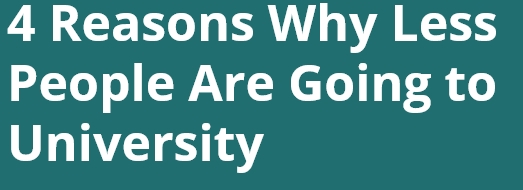
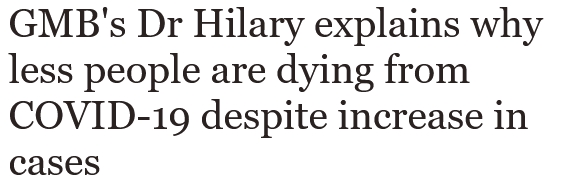
Few or less? Much or many?

They’re questions that cause much debate. Should you use “few” or “less” when trying to compare two amounts? When do you use “many” and when do you use “lots of” or “much”?

Even the best of us can get it wrong … headlines from a digital jobs website, above, and a UK newspaper

The main rule is to decide whether you can count the thing or things you are describing. 

English has countable nouns and uncountable nouns. 

If you are talking about people, cars, trucks, or knives and forks, you can count how many individual items or people you are referring to. If you’re talking about sand or rice or traffic, you can’t (life’s too short).

We use “few” or “fewer” with countable nouns, and “less” or “lesser” with uncountable nouns.

Some examples with countable nouns:

  • Nearly 50 people came to church yesterday; fewer attended today
  • We are expecting fewer than 100 cars in the car park
  • There were fewer knives and forks on our table than on theirs

Some examples with uncountable nouns:

  • After the chaos yesterday, there was less traffic on the roads today
  • There was less sand in the car than in the shoes

The same rules apply with adverbs such as much, many, a lot of, and more

“Many” is used with countable nouns:

  • Many people took part in the protest
  • Many knives disappeared after the free lunch
  • Many cars and vans were parked on the pavement

“Much” is used with uncountable nouns:

  • Much of the crowd dispersed when it started raining
  • Much of the traffic was from out of town
  • Much of the cutlery had been bought from charity stores

‘A’ or ‘an’

An honest or a honest politician?
An honour or a honour?

There’s a rule in English which says that the indefinite article before a noun beginning with one of the vowels – a, e, i, o, u – should always be “an”. If the noun starts with a consonant, the article should be “a”.

So why do we often have a problem with words beginning with the consonant “h”? Many a time I have eavesdropped on busy newspaper subs pausing to discuss whether we should write “a honour” or “an honour”.

What about “an European”? An university? A hour?

The rule stands … but you should go with the sound that that initial letter produces: If it is a vowel sound – “o” in honour and hour – you should use “an”.

If the first letter of a noun produces a consonant sound – “y” as in university (you-niversity) or union (you-nion) – you should use “a”. “Hotel” should have an “a” before it.

In words such as “understudy” or “undeveloped” the “U” has a vowel sound so they are preceded by “an” … “An understudy excelled last night”, or “an undeveloped economy might provide cheap labour”.

“Urn” would have “an” in front of it as the “U” has a vowel sound.

The same rule applies to acronyms and abbreviations: a UK citizen, an SAS officer, an NME (en-em-ee) article, a Nato (Nay-to) secretary.

The or thee

In spoken English there is also a general rule about how the definite article, the, is pronounced. If it comes before a word that starts with a vowel sound, it should be pronounced “thee”; if it comes before a consonant, it’s pronounced “thuh”. 

Examples would be “Thee apples”, “thee oranges”, “thuh satsumas”, “thuh university”, “thee inkspot”.

Playing with words

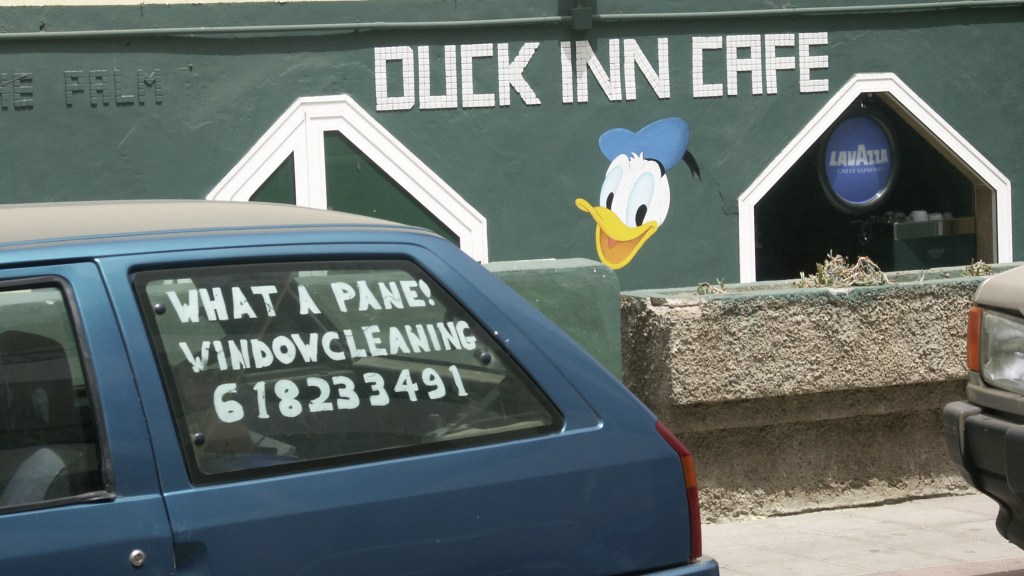
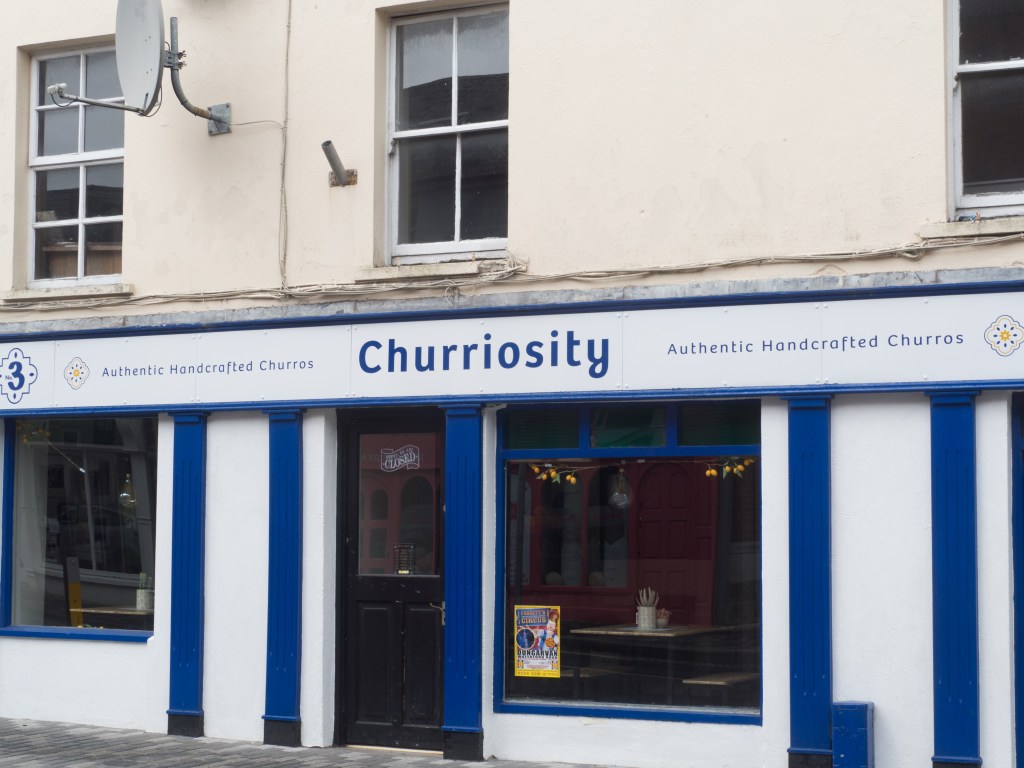
People like playing with words … especially if they’re searching for a catchy name for a business that they hope will make their millions.

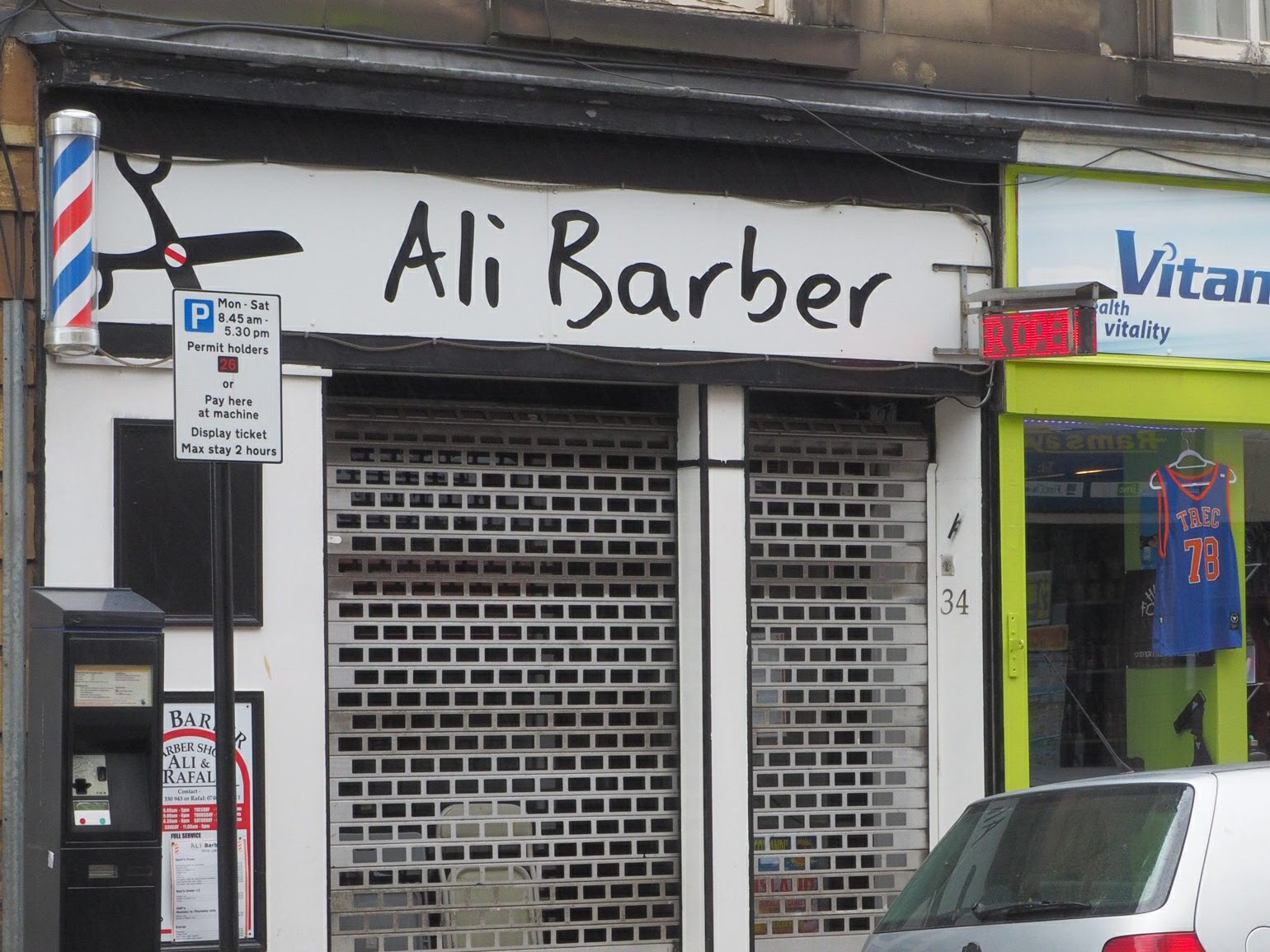
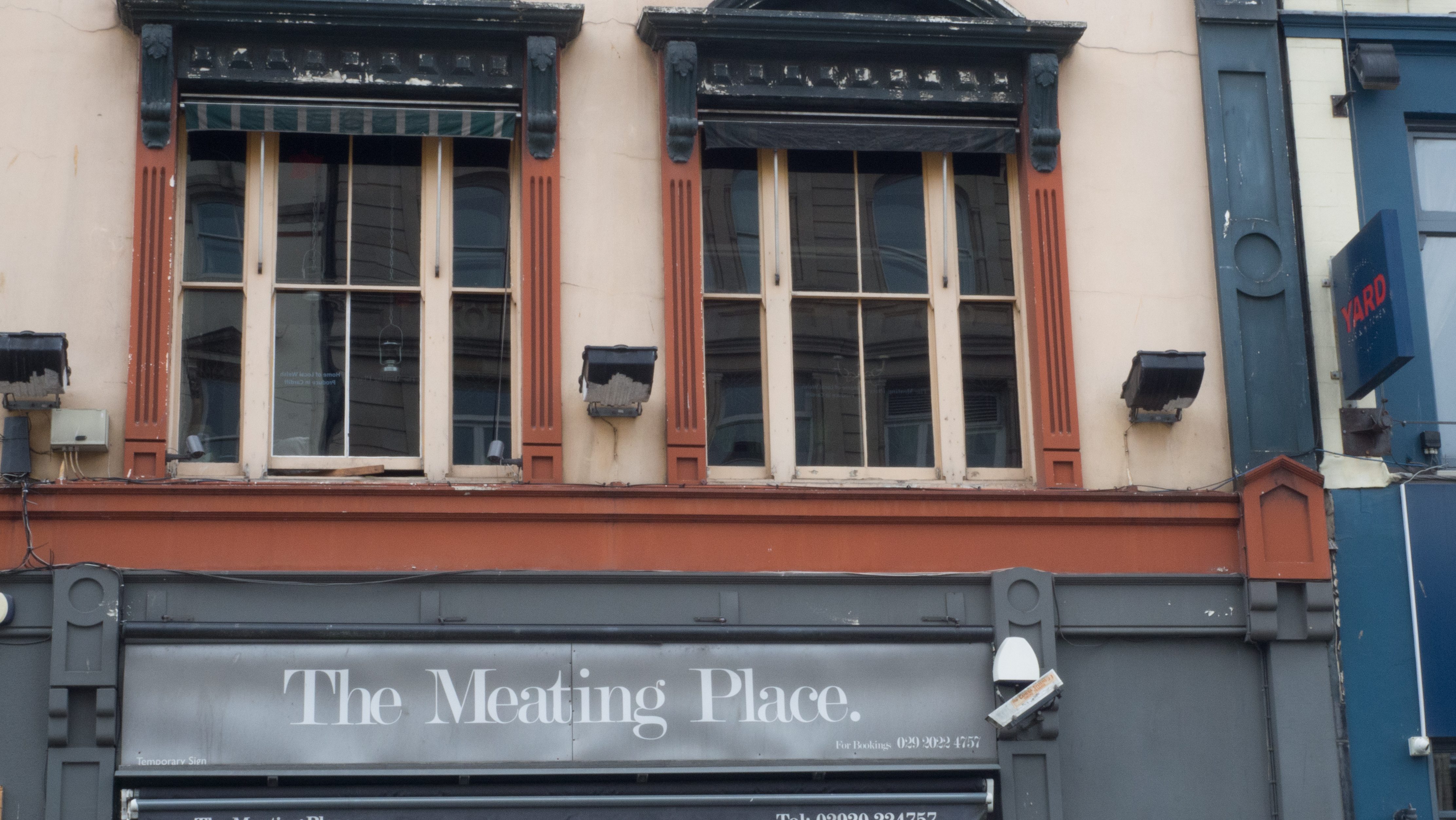
In most of these examples the “play” is produced by replacing a key word with one that sounds the same but is spelt differently – “barber” for “Baba” for example. The substitute word still makes sense, and points the reader to why it has been used. 

It brings a smile to their lips, and it’s likely to leave a note in their memory.

It’s when we use the wrong word that we trigger confusion instead of humour. But that’s for another day.

A touch of the Arabian Nights in Stirling, Scotland
A clue in the name of this old Cardiff venue … it’s not vegetarian
Signs that make you wince, and then maybe smile
Aping a film title in Dungarvan, Ireland
An ice cream shop with a bit extra in Dungarvan, Ireland